
Pipe Handling and Processing Lines
Pipe is an awkward thing to automate: long, heavy, round, and unforgiving when it moves unexpectedly. CTX Automation builds the racks, kickers, lifts and conveyors that move it, and the controls that put each joint exactly where a blast head or spray lance needs it.
Tracked joint by joint
On our processing lines, every pipe is an individual record. Joints are logged by work order, serial number and length at the entry conveyor and tracked through each station: surface prep, coating, curing and inspection. The recipe for that pipe's specification drives each station's parameters, including rotation speed, travel rate, flow rates and cure times. An inspection hold flags a joint without stopping the line, and the finished record shows exactly what every joint received. When a customer audits a shipment, the answer is a report.
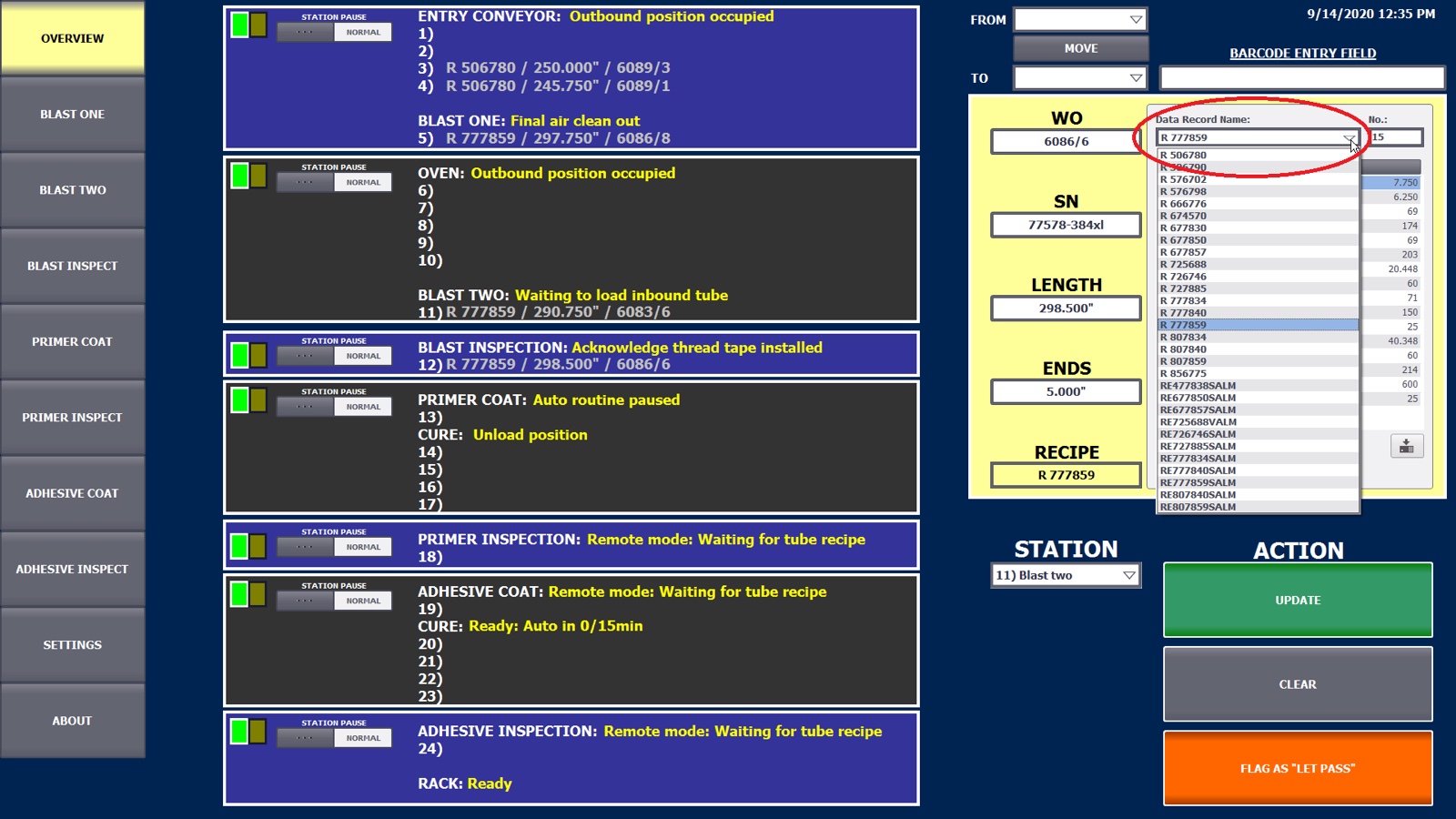
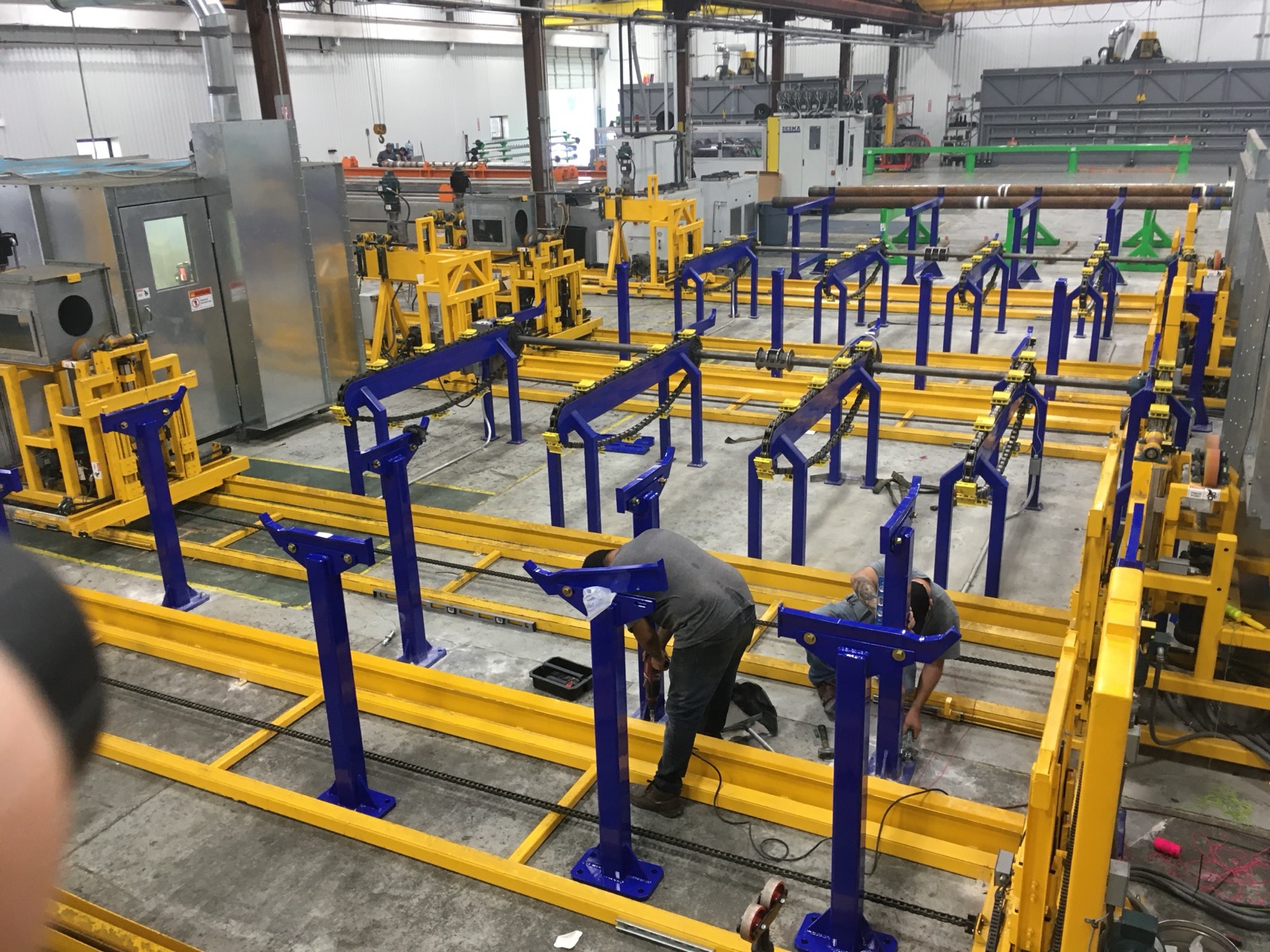
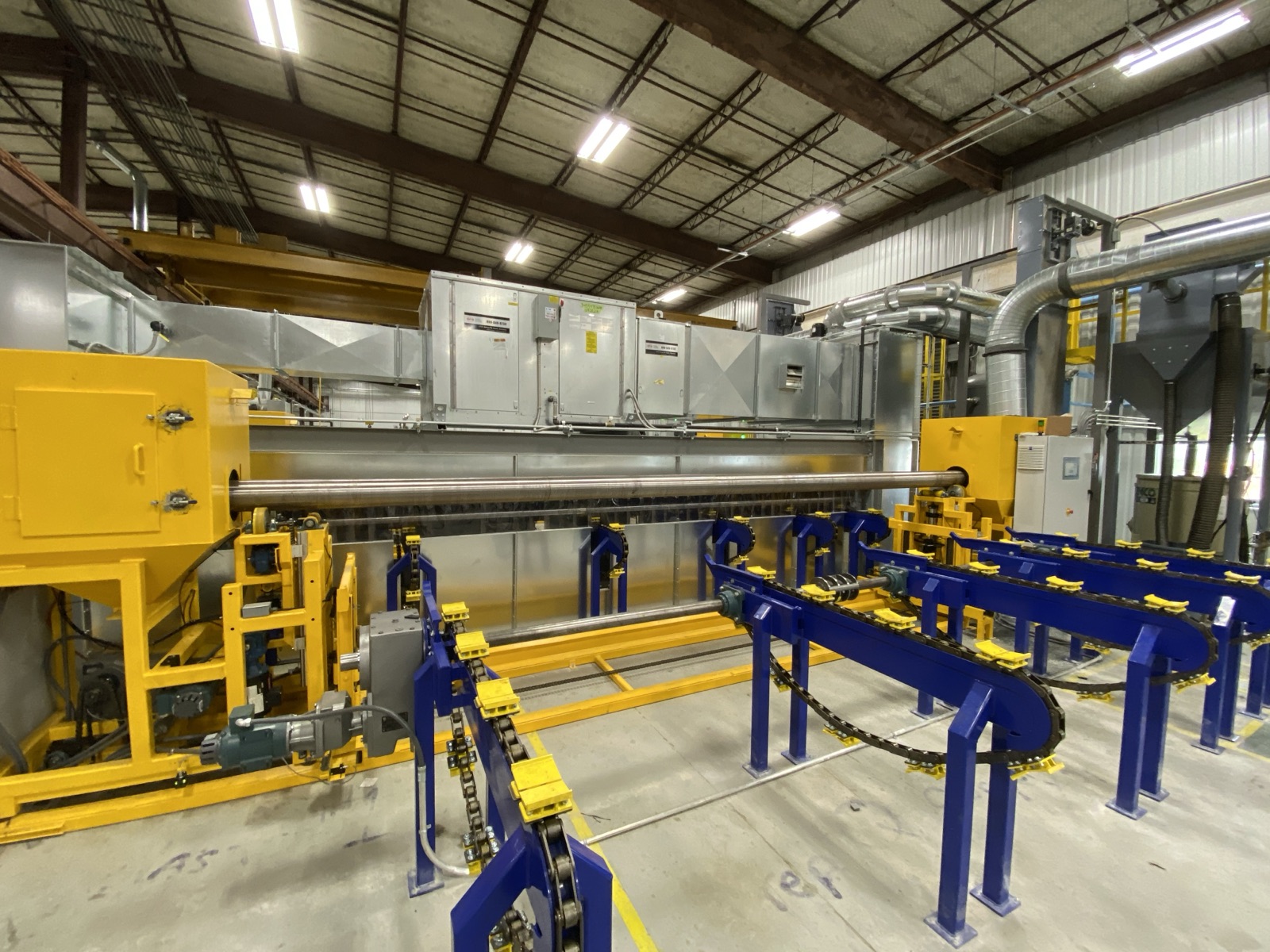
Line overview on a turnkey stator line: each tube tracked through entry, two blast stations, oven, primer coat, cure, adhesive coat, cure and inspection.
Blast, coat and cure, enclosed and repeatable
The processing stations themselves are home ground. Clemtex has built surface preparation equipment since 1955, and CTX Automation builds that experience into enclosed, automated lines: conveyors, blast units, dust collection, recipe-driven coating with position feedback, and controlled cure, where profile and film thickness come from the recipe rather than the operator. Rotation and travel speed run closed-loop, because coverage is a speed problem.
The handling toolbox
- Kickers, racks and entry and exit tables
- Chain and roller conveyors with proximity feedback
- Hourglass-wheel entry drives and powered rotation wheels with auto-centering
- Lifts and leveling with encoder feedback for a custom centerline per part
- Pipe insertion boxes and cabinets on linear tracks for pipe-end blasting
- Cart and track assemblies for lance drives
- Interlocked sequencing with a discrete interface to a customer's master control system where required
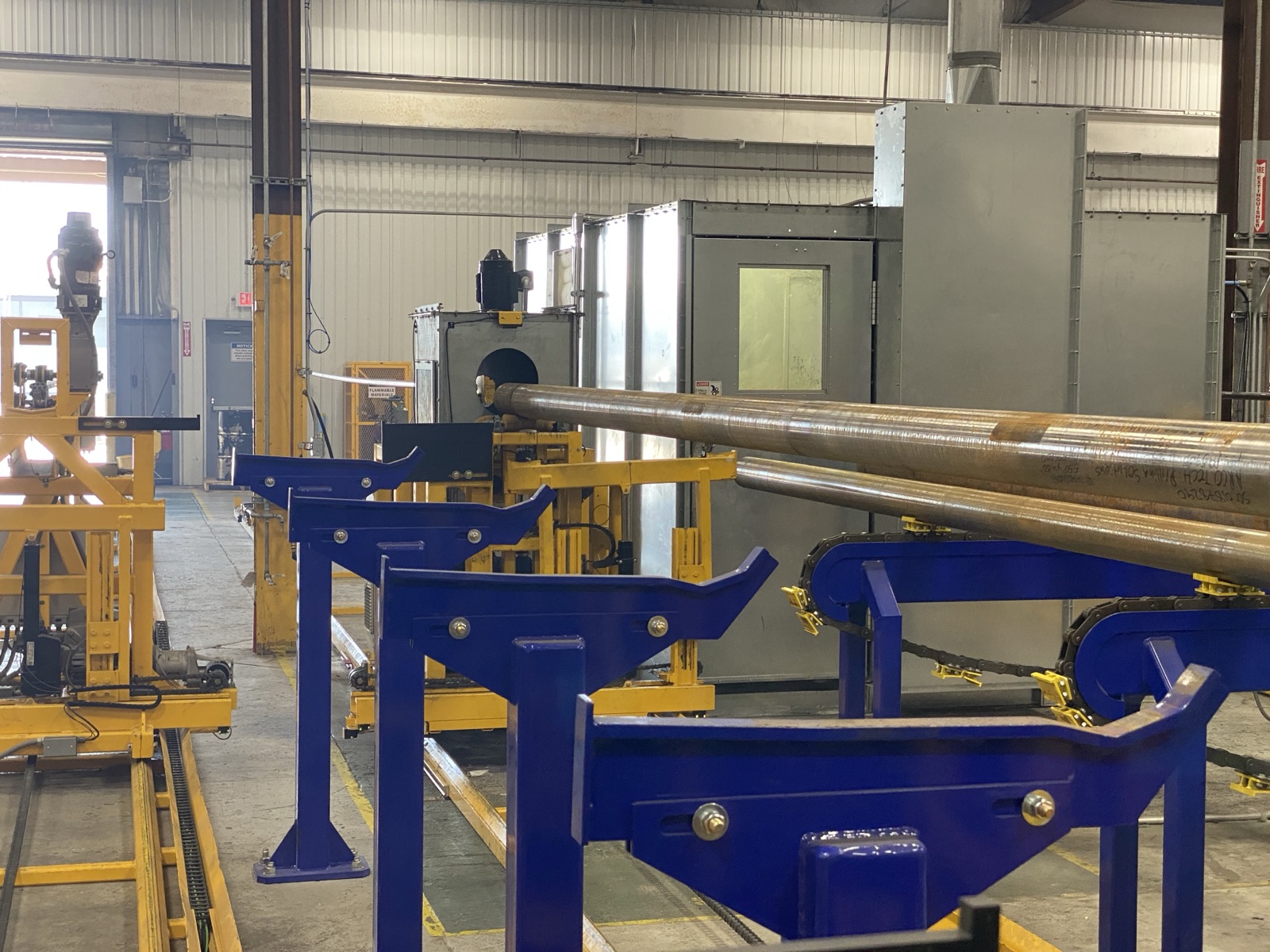
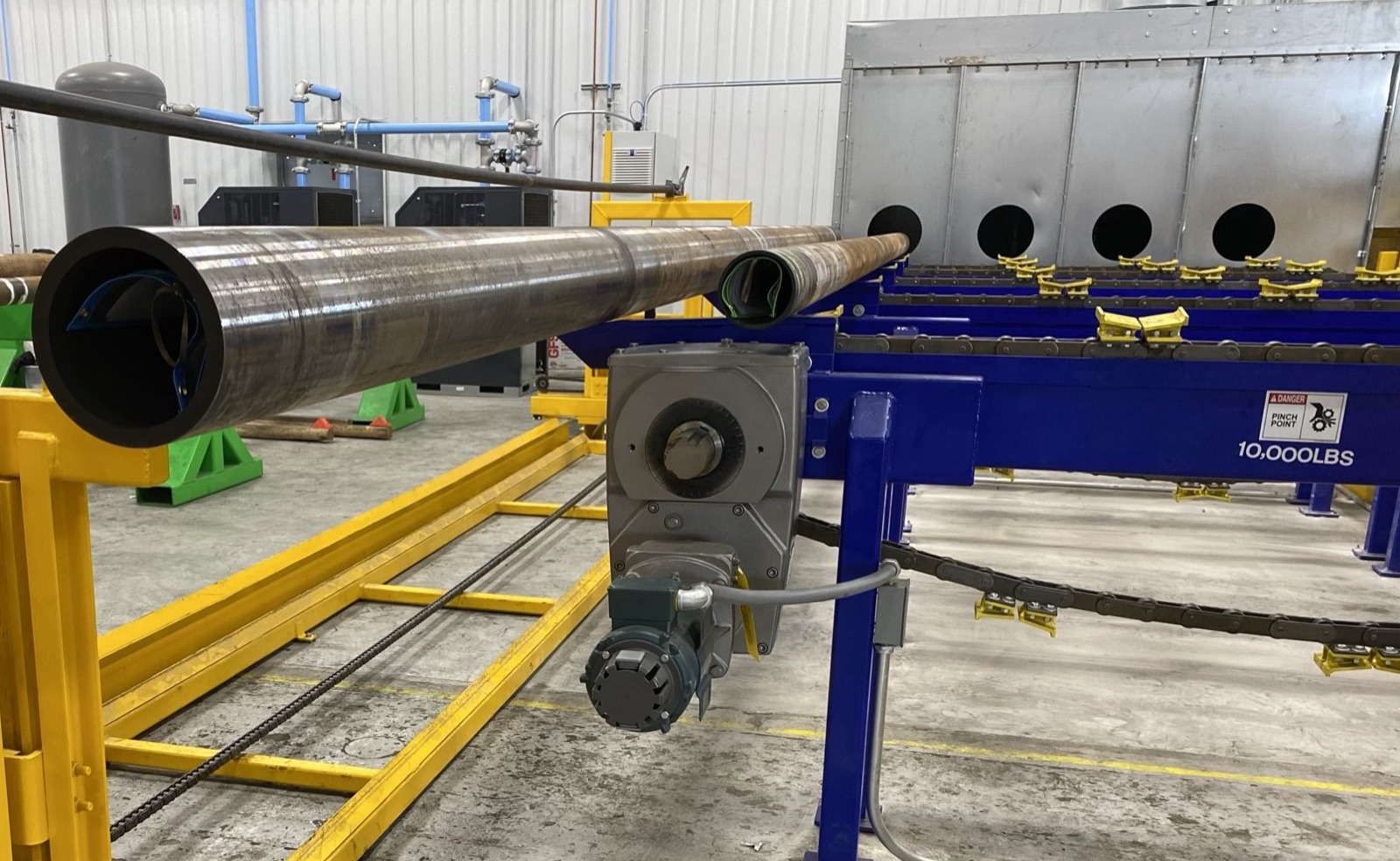
Pipe staged on kickers at the cabinet entry.
Something heavy has to move on cue?
From the entry conveyor to the finished record, tell us about the line.
Get in Touch (713) 672-8251