
Gravimetric Solids Batching and Vacuum Injection Skids
Moving powders and abrasives accurately is a different problem from moving liquids. The material wears everything it touches, bridges when you least expect it, and cannot be metered by a flow meter. Our answer is gravimetric: weigh the vessel, not the stream.
Full fill, weigh, pressurize, convey and vent cycle, with the P&ID and the material line scheduler on screen.
One vessel, multiple materials
A single weigh vessel on load cells serves multiple material lines: hoppers, totes and drums. It draws each material in under vacuum, confirms the batch by weight, then pressurizes and dense-phase conveys it to the process. One set of wear parts and one instrument set. The scheduling intelligence lives in software, where it is cheap to maintain, instead of in extra iron.
Accuracy that verifies itself
Every batch is weighed on the way in and confirmed empty on the way out, so totals are measured rather than inferred. In-flight compensation closes material valves early to absorb the material still falling, which is the difference between hitting a target weight and chronically overshooting it. Collected fines from dust control return to the weighed batch, not to a waste stream.
Scheduled against the clock
Where multiple materials feed a continuous process on daily targets, the batching system schedules itself. It spreads injections across the day to hit every line's 24-hour total, warns when demand exceeds what one vessel can deliver, and logs every injection with target, actual and cycle time.
Built to keep running
Abrasive service is hard on valves, so the design assumes maintenance. Double-blocked material inlets buy a service window without a shutdown, and wear parts sit where replacement takes minutes. The controls make the same assumption about faults: a problem on one material line locks out that line only, while the vessel keeps serving the others. A stalled fill is diagnosed, not just alarmed. The system distinguishes a plugged line from an empty source from an air leak and tells the operator which fix to make.
A no-material-flow fault locks out one line while the vessel keeps serving the others.
In the field
For a refinery services contractor we built a skid-mounted vacuum and injection system for catalyst handling. The unit vacuums material from 55-gallon drums and injects it into a process line on one button: the PLC times the vacuum cycle, injects automatically, and returns to standby. It includes a 10 cubic foot injection vessel with PLC-actuated ball valves, an inlet hopper, a reverse-pulse dust collector and a venturi vacuum producer with a bulk pick-up tool. The control panel is NEMA 4 rated for Class 1 Division 2 with Z-purge.
A related walnut-shell injector delivers media for coke removal in refinery process equipment.
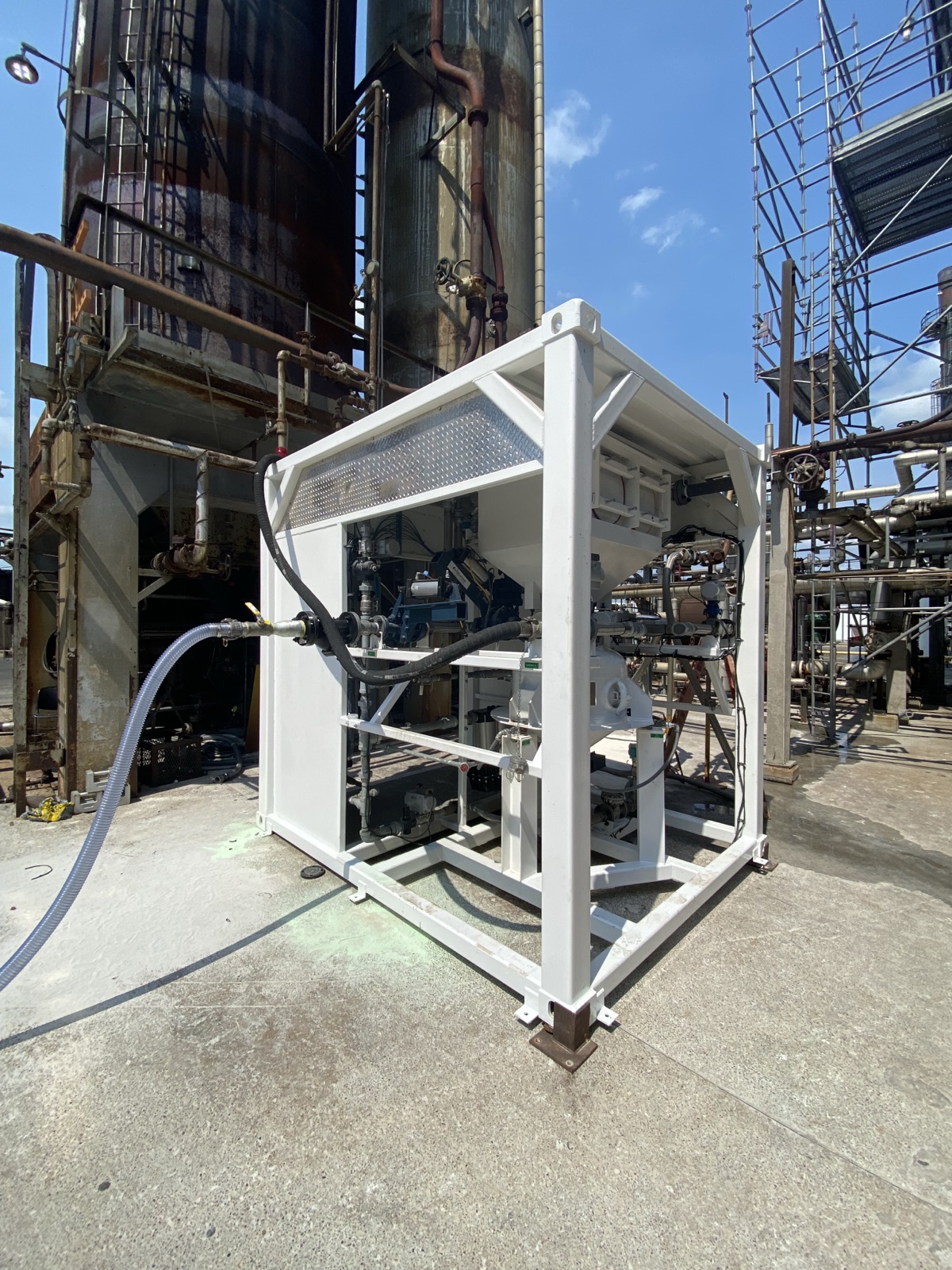
Skid-mounted injection unit in service at a refinery.
Moving powders that wear everything they touch?
Tell us the material. We will weigh the vessel, not the stream.
Get in Touch (713) 672-8251