
Batch Blending and Chemical Transfer
A blending plant is rarely doing one thing at a time. A truck is offloading into the tank farm while one reactor charges its next batch and another drums off finished product. The control system has to keep every one of those operations accurate, interlocked and independent.
Plant overview: truck offload to the tank farm, one reactor charging with agitation and recirculation, one reactor in drum-off. Blue lines are charging, orange lines are offload and drum-off.
Full-plant batch blending control
CTX Automation builds batch blending systems that run the whole plant as one system: chemical transfer from storage tanks through VFD-driven pumps and actuated valves into blend reactors on load cells, with every ingredient added by weight, in sequence, per recipe.
Recipe-driven, measured by weight
Each batch runs from a stored recipe. Ingredient percentages are validated to total exactly 100 percent before a batch can start. Every injection is measured on the reactor's load cells rather than inferred from pump speed or time: target weight in, actual weight recorded, per shot, per batch. Agitation and recirculation come on automatically at the right point in the load. Ingredient-specific rules are enforced by the sequence itself, so temperature-sensitive additives are held until the batch has cooled to specification and water always charges last.
Interlocked at every step
The system refuses what the plant cannot do: a batch that would exceed reactor capacity, a shot that a source tank cannot cover, an offload into a tank at high-high level. Valve position feedback confirms every open and close. Transfer pumps ramp on variable frequency drives instead of slamming across the line.
Recipe validation
A recipe that does not total 100 percent cannot be saved, and a batch cannot be scheduled from it. The operator corrects the formula, saves it, and schedules the batch. The reactor flips to charging and the confirmation is logged.
Recipe management: the save is blocked until the percentages are corrected, then a 70,000-lb batch is scheduled from the saved recipe.
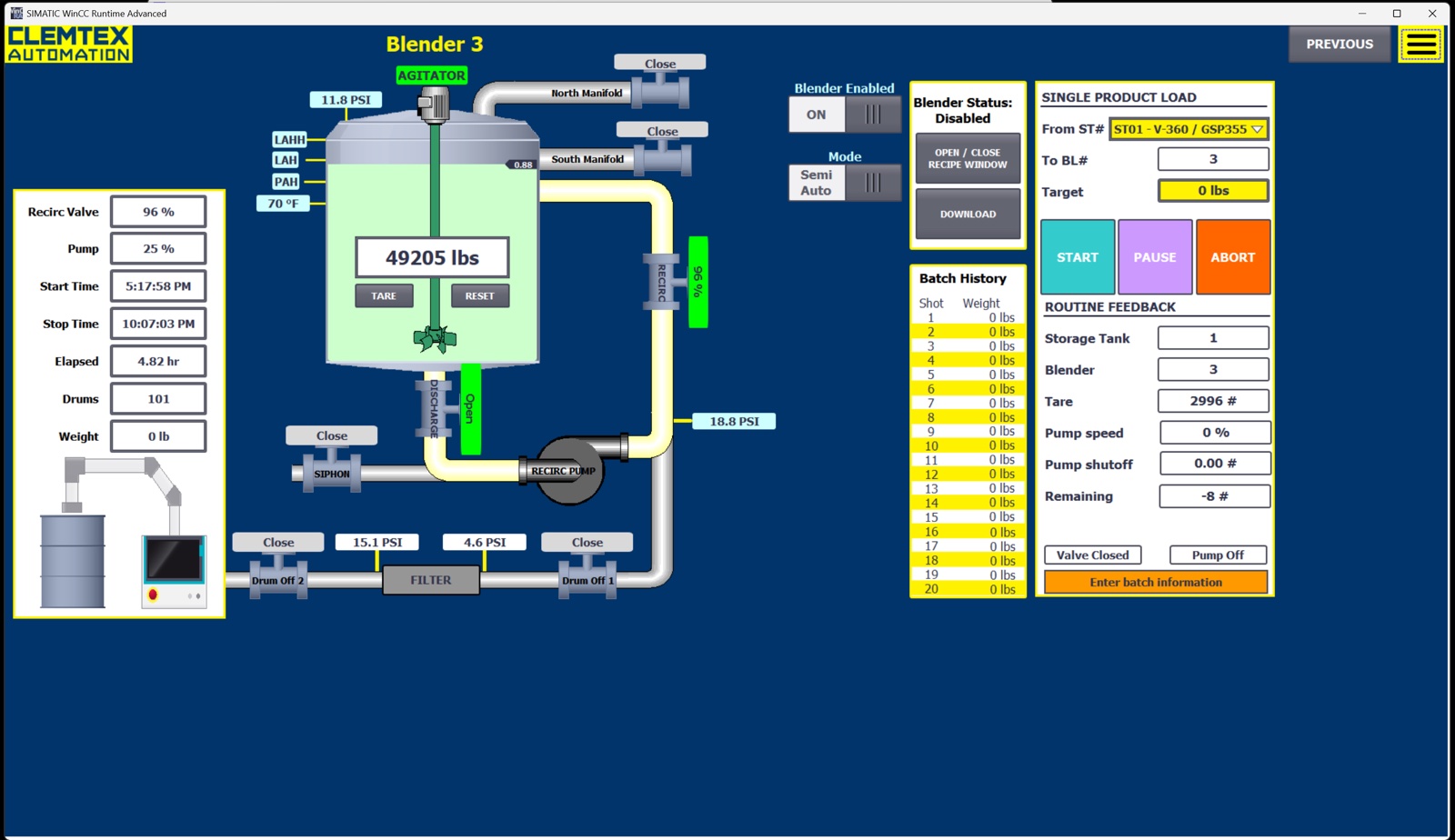
A blender screen from the installed plant: the reactor on load cells, recirculation and agitator status, batch history and the drum-off stations.
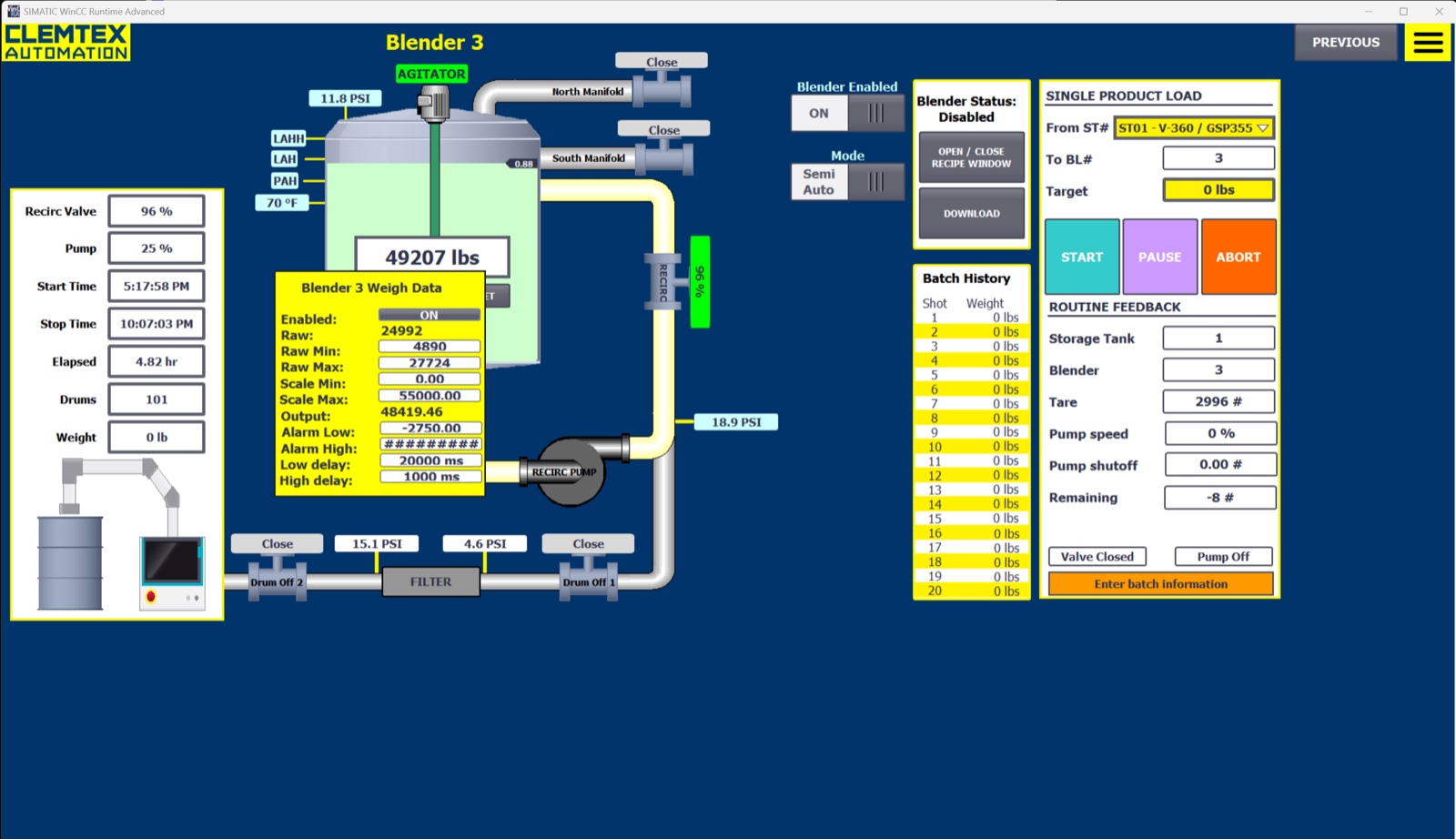
The weigh-module faceplate behind that number: raw counts, scale range, alarm limits and filtering, all configured in the PLC.
Proven in the field
A Texas spray-foam chemical plant contacted us to convert its blending operation to fully integrated automated control. The work was phased so production never stopped. The new tank-farm controls were installed alongside the legacy system with zero production disruption, the indoor and outdoor storage tanks and truck offload were converted next, and the blender panels were rebuilt with new drives, breakers, weigh modules and remote I/O during a plant turnaround on a compressed two-shift schedule.
- 200+ automated valves with position feedback
- 150+ instruments: radar level, pressure, temperature and weigh modules
- 50+ motors on variable frequency drives
- 40+ storage and reactor vessels
- 900+ drums per day at pack-off
Scope covered P&ID-driven design, panel fabrication, motor routing, instrumentation, scale calibration, networking, SCADA and operator training.

The main control panel before and after the upgrade.
Running a plant that is never doing one thing at a time?
Tell us about your tanks, reactors and recipes. We will run the whole picture as one system.
Get in Touch (713) 672-8251