
Blast and Coat Lines for Stators, Rotors and Tubulars
CTX Automation designs and builds automated internal- and external-diameter blast and coating systems for downhole motor stators, rotors, and tubular products. The operator enters the part; the PLC computes the process speeds and runs the cycle.
Why the process has to be repeatable
Drilling motor stators and PC pump stators are bonded assemblies. A uniform blast profile and a uniform coating thickness are what keep the elastomer bonded to the tube. Our systems fully enclose the process area, keep moving parts away from blasting ricochet and overspray, and compute every process speed from the part dimensions so the result does not depend on the operator.
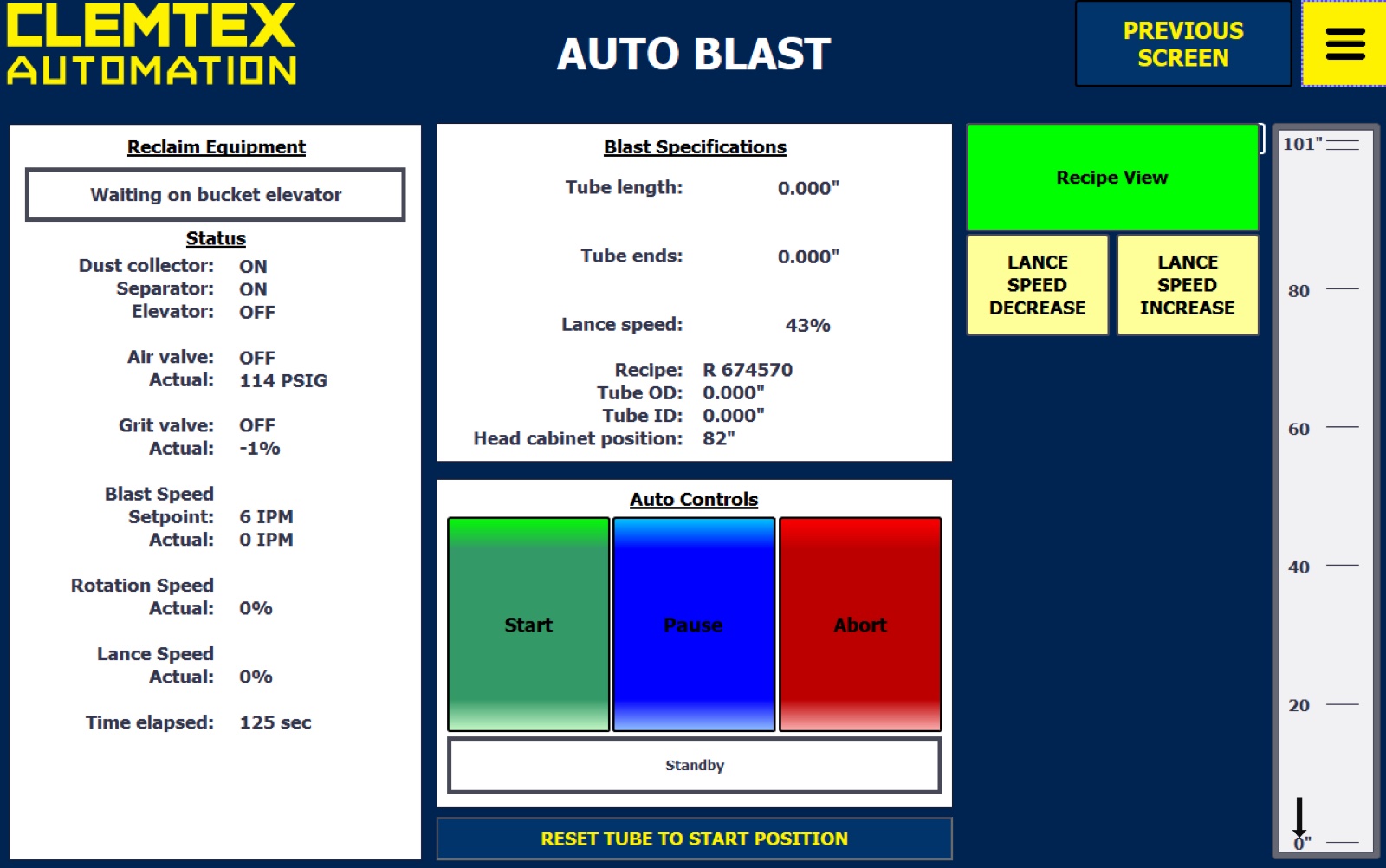
Auto blast cycle: reclaim equipment status, blast speed setpoint and actual, tube specifications, lance and head-cabinet position.
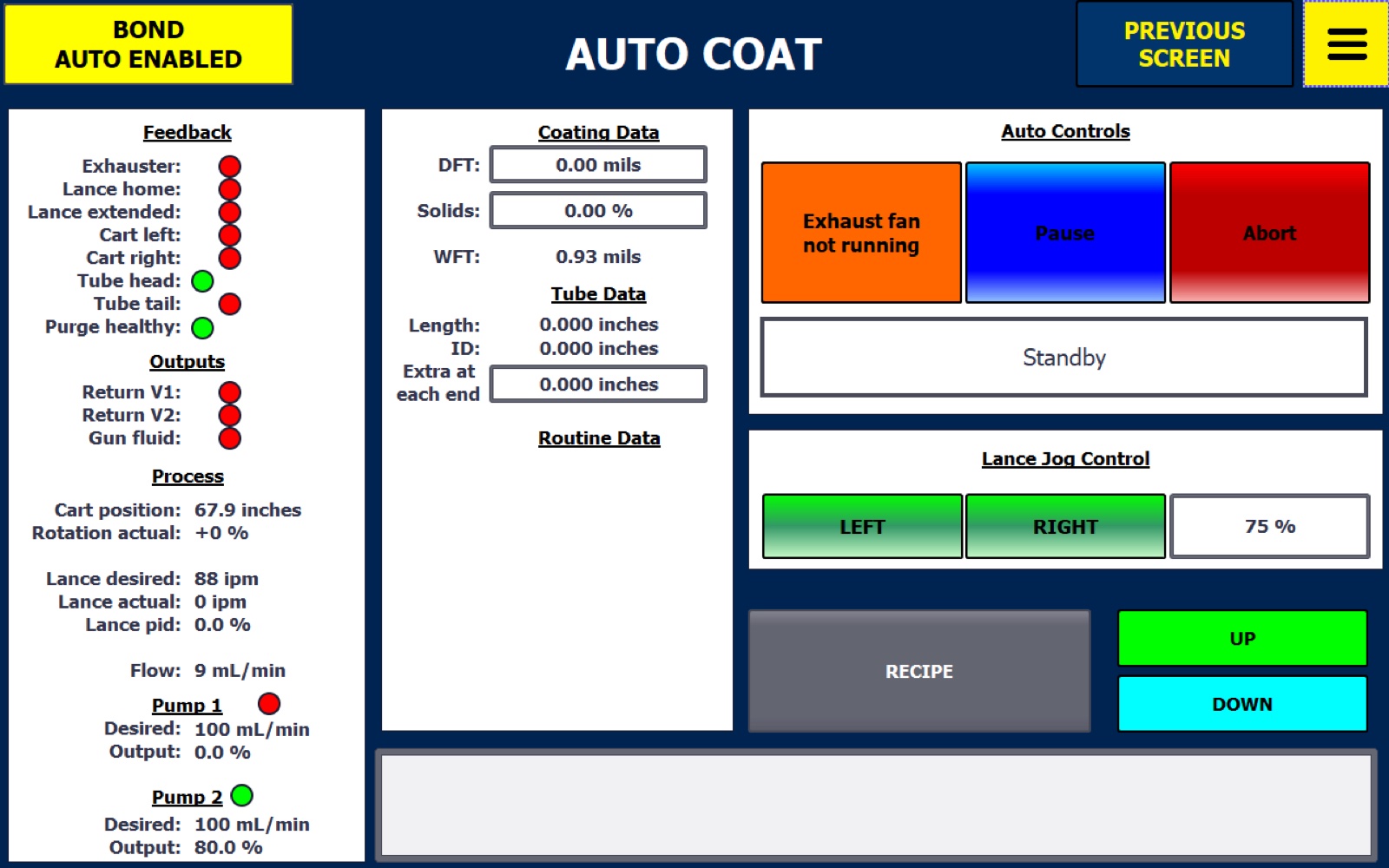
Auto coat cycle on the same line: lance PID, pump flow setpoints, dry-film thickness, solids and wet-film readback.
Blast side
A traveling lance with an angle nozzle runs the full length of the tube at a PLC-computed rate while powered rotation wheels spin and auto-center the part. Enclosures at each tube end contain dust and abrasive. An abrasive cut-off valve allows an air-only blow-down on the retract stroke. Lance position is held to a tenth of an inch on incremental encoders, and pressure and media-flow transmitters confirm that the blast is actually happening at the rate the recipe expects.
For rotors, the same idea works from the outside. The rotor is suspended between a powered headstock and a tailstock center while an enclosed, rubber-lined blast cabinet travels its length on a track, blasting the OD with pressure nozzles to a near-white finish at roughly a dozen joints per shift.
Coat side
A coating lance with an internal spray gun travels the tube at a rate derived from the target thickness, the coating's percent solids and the measured flow rate, while the tube rotates during application and cure. A flow transmitter monitors actual delivery and the PLC trims pump pressure to hold it. Between cycles the system drops into recirculation so the material stays live. A moving-enclosure design covers each tube end during spraying, and a dry-filter crossflow exhaust chamber captures overspray.
On the application side we work with Binks and Graco equipment, and where the coating or the geometry is difficult we run our own tubular guns, designed and refined by CTX for exactly these jobs.
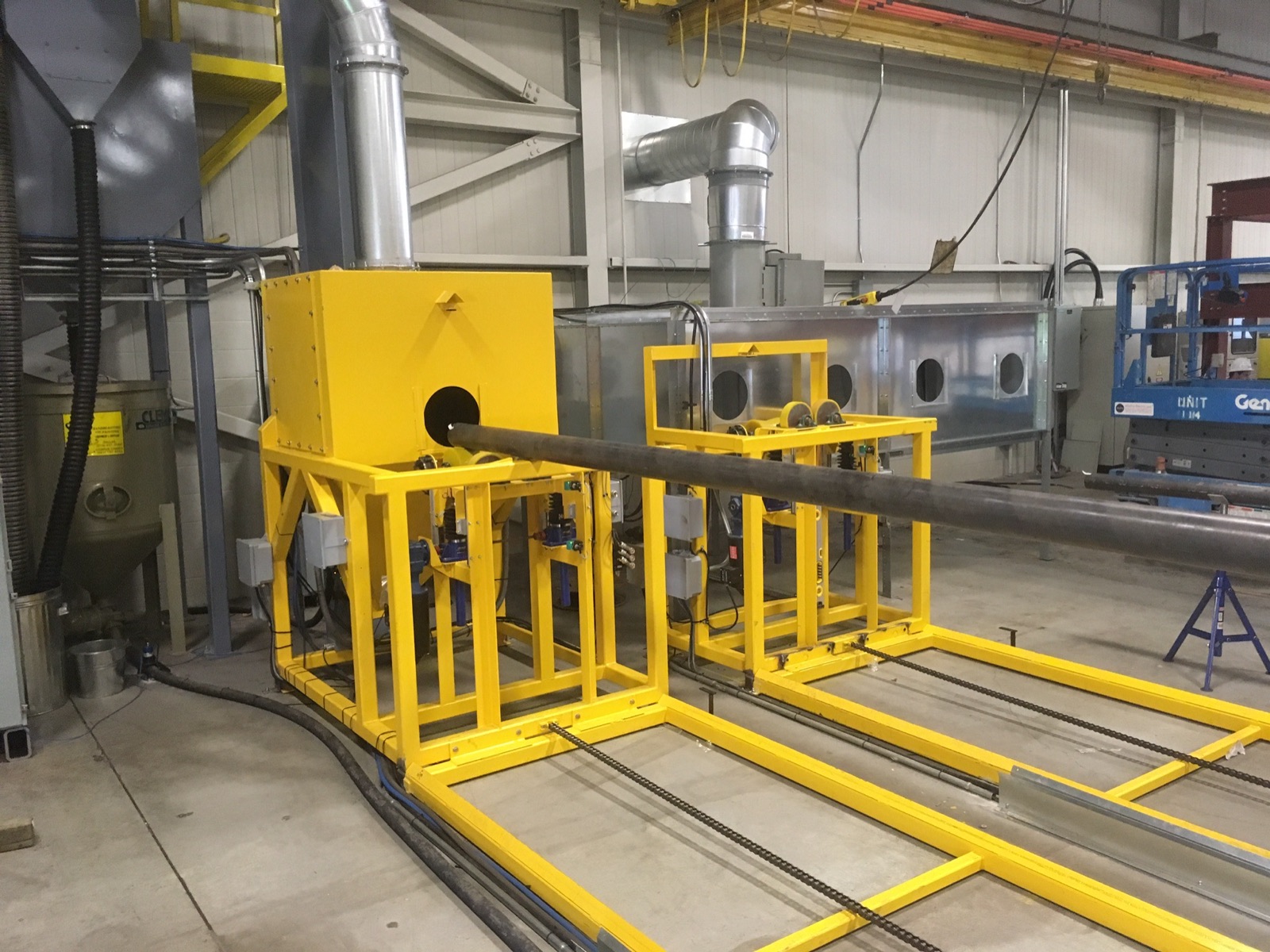
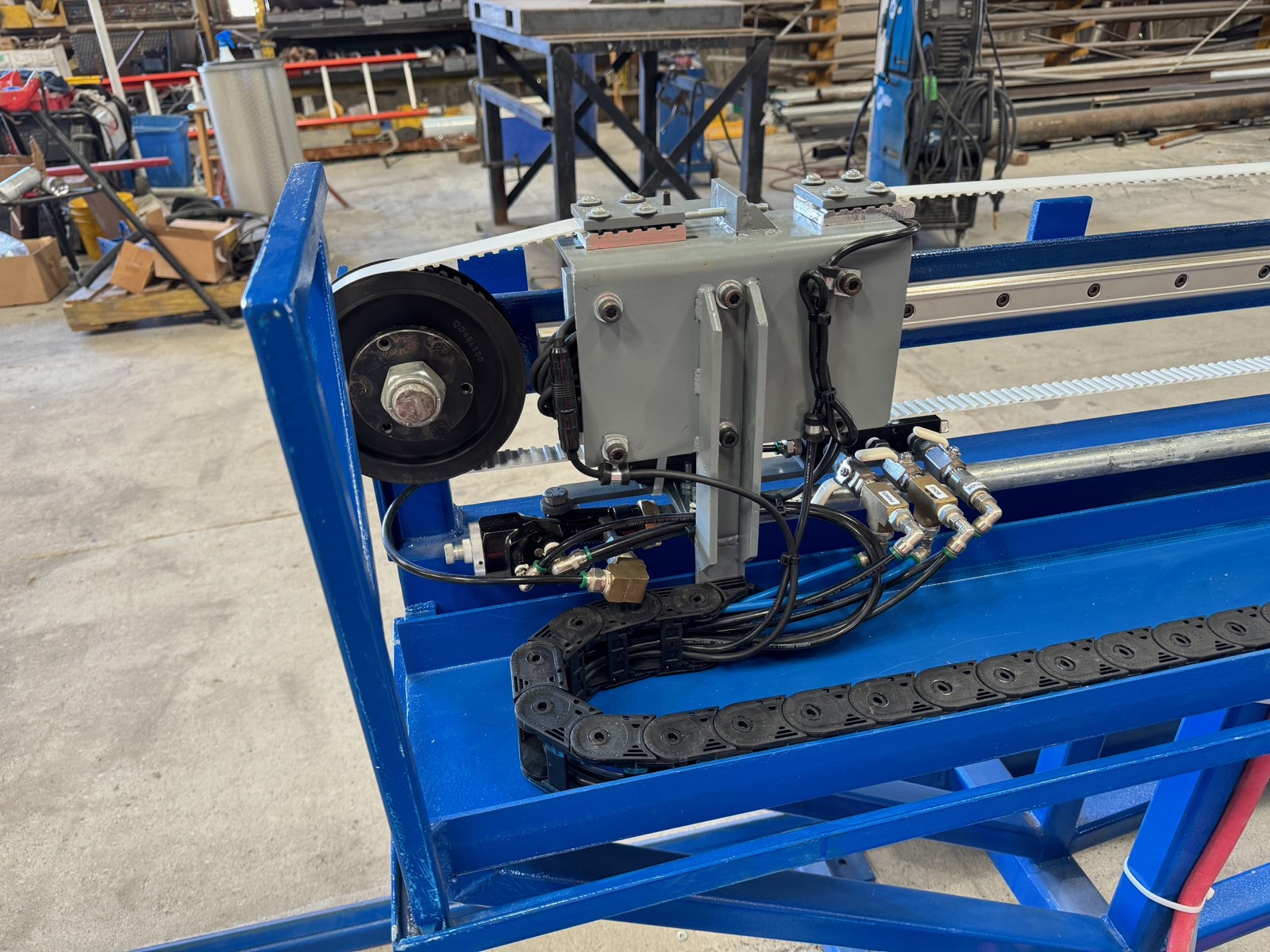
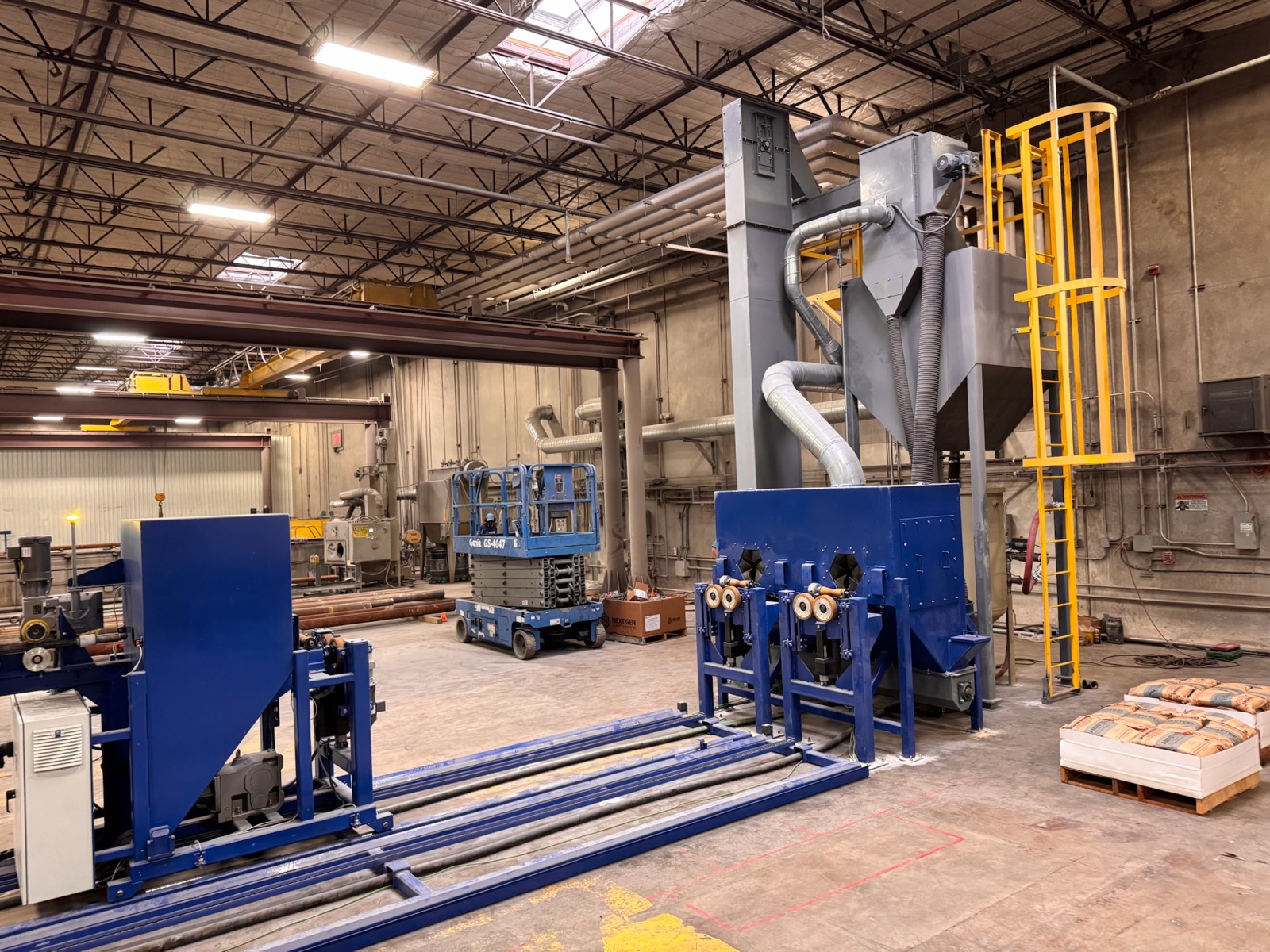
Abrasive flow, measured rather than assumed
We monitor abrasive flow through the blast lines themselves. That tells the system immediately when a line is plugged, and it lets the control system predict the most effective process speed for each application instead of running every part at a conservative default.
What a complete line includes
- I.D. blast system with mechanical media recovery and reclaim for steel grit, aluminum oxide or garnet
- I.D. coating system with coating mix room, recirculation and controlled cure
- Dry-film-thickness and blast-profile inspection stations
- Tube conveying, entry and exit racks, lifts and powered rotation
- Dust collection and exhaust filtration
- Compressed air equipment and full system integration
- Siemens PLC and touchscreen HMI with recipe storage, commissioning screens and secure remote access for support
Systems are delivered from a single stator I.D. blast machine up to a complete turnkey processing line, with dual-lance options where throughput demands it. Every system is engineered to the customer's tube range, finish specification and floor space.
Have a part that needs blasting and coating?
Tell us the part, the specification and the rate. We will engineer the system around them.
Get in Touch (713) 672-8251