
Weighing and Batching: Integrated at the PLC
In almost every plant we touch, the measurement that matters is weight. CTX Automation builds weighing into the control system itself, not beside it, so the weight is live data the sequence acts on every scan rather than a number on a standalone indicator.
Four fill scales in rotation: target versus actual weight per drum, auto-advance to the conveyor, and a rolling log of every fill.
Weighing that lives inside the PLC
Load cells on tanks, hoppers, reactors and platform scales read directly into the PLC through integrated weigh modules. With weighing at the controller:
- batches meter by actual weight instead of time or flow assumptions;
- recipes carry tolerance checks the PLC enforces;
- tare, fill and cutoff decisions happen in milliseconds;
- every shot lands in the batch record automatically.
We handle the full weighing scope in-house: scale selection, load-cell installation review, weigh summing, calibration, scaling, filtering and alarm limits, configured and supported by the same engineers who write the control logic. On one coating system we added a load-cell watchdog that compares the three channels and identifies a compromised channel on the HMI before it can corrupt a batch.
Live blending on scales
The classic way to batch dry ingredients is one at a time: dose, settle, dose the next. We build systems where multiple hoppers and augers dose simultaneously onto one live scale, with the PLC trimming each feeder's rate in real time so the blend hits both ratio and total weight in a single pass. It is substantially faster than sequential dosing, and it is only possible when the weighing lives in the PLC. The same discipline runs our loss-in-weight feeders, where the scale watches material leave rather than arrive.
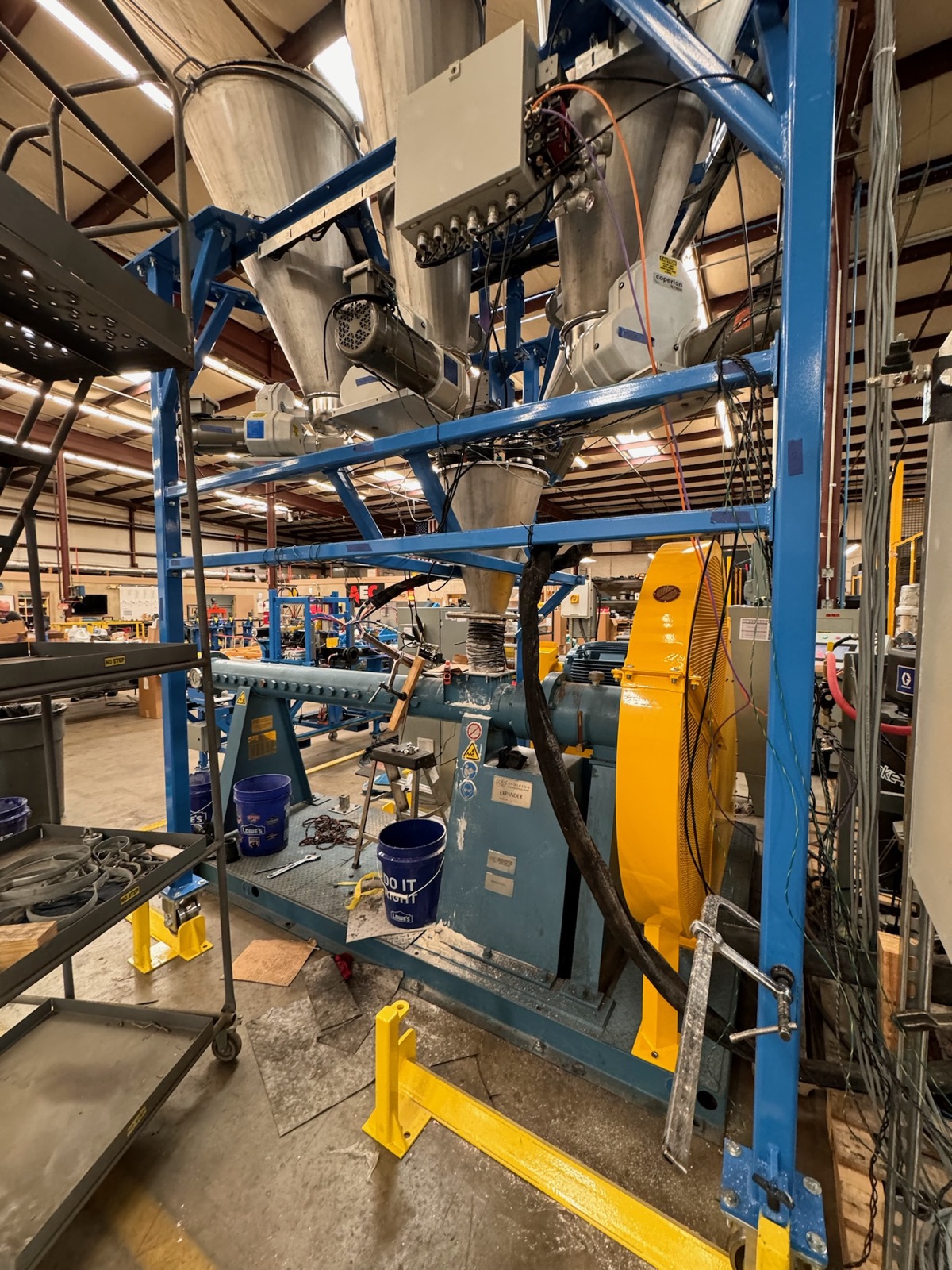
A multi-hopper dosing frame: several feeders, one live scale, one pass to ratio and total weight.
From tank farms to bags and drums
The same weighing architecture handles storage tanks holding tens of thousands of pounds, reactors batching by recipe, and fill stations metering individual drums and bags to target weight, with check-weighing to catch the exceptions. One plant we automated runs its entire operation on weight: more than two dozen weighed vessels, every batch, tare and drum fill logged and trendable.
A pack-size change mid-run is a setpoint, not a changeover: all four scales retargeted, and the log shows both pack sizes back to back.
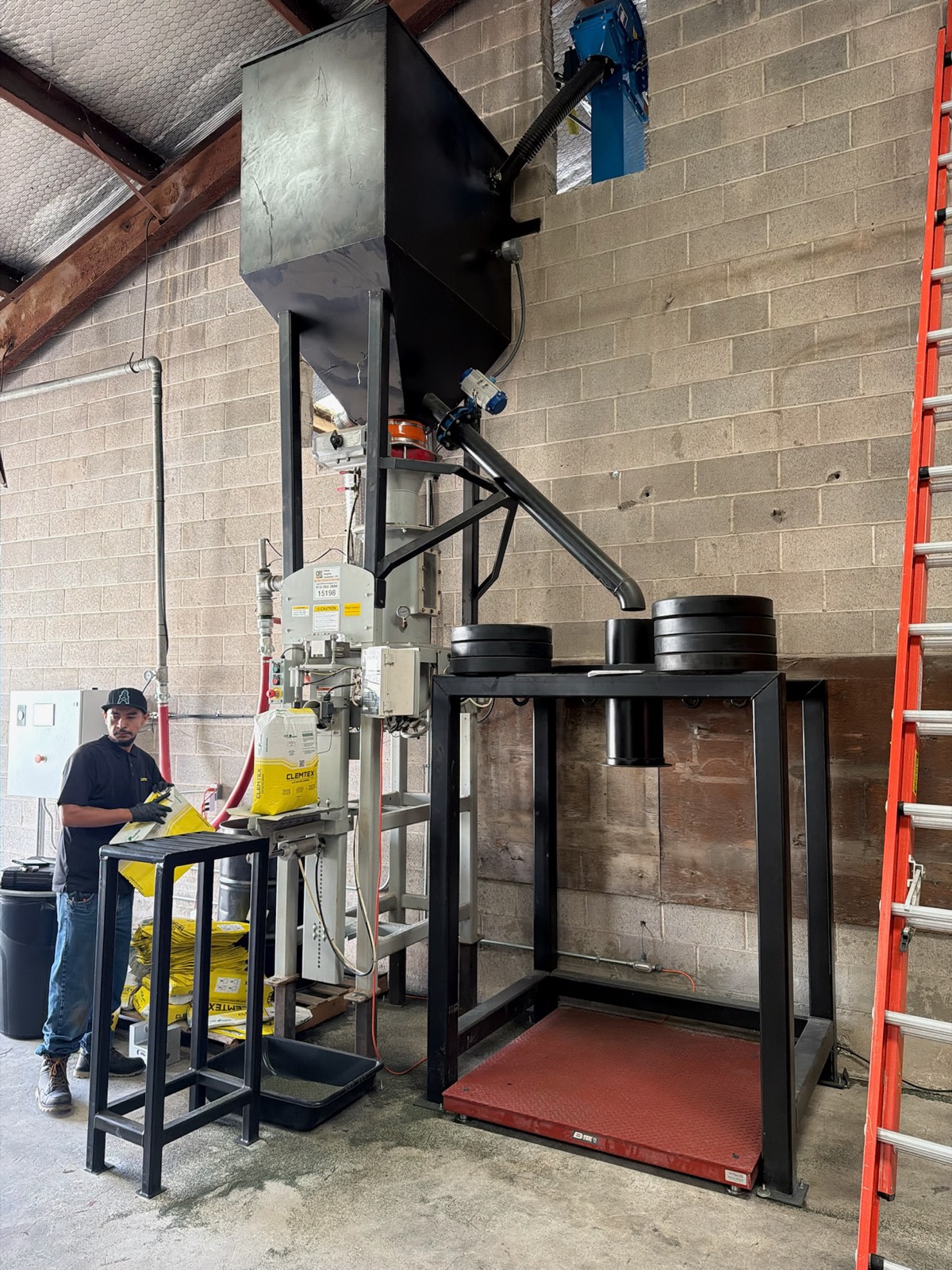
A bag fill station: weigh hopper above, platform scale below, test weights at hand for calibration.
Bagging and pack-off
Where bagging or drum filling sits at the end of a line, we run it as part of the same control system: bag and drum stations meter to target weight on live scales, check-weighing catches exceptions before they ship, and counts, weights and totals per bag and per lot fall out of the batch record automatically. Bag dump stations, incline conveyors and dust control are part of the scope, not an afterthought.
The record QA actually wants
Because every weight passes through the control system, traceability comes with it: batch weights and totals per run, per-container records at pack-off, and historian trends per vessel. When someone asks for batch records, the answer is a report.
Got a scale wired to nothing?
Tell us what you measure. We will make it live data the sequence acts on.
Get in Touch (713) 672-8251