
Legacy System Upgrades: Modern Hardware, Proven Logic
The sequences, interlocks and protections that have run your plant for years are preserved and verified. What changes is the hardware around them: obsolete drives, discontinued PLCs, panels with no parts path, and screens nobody can modify.
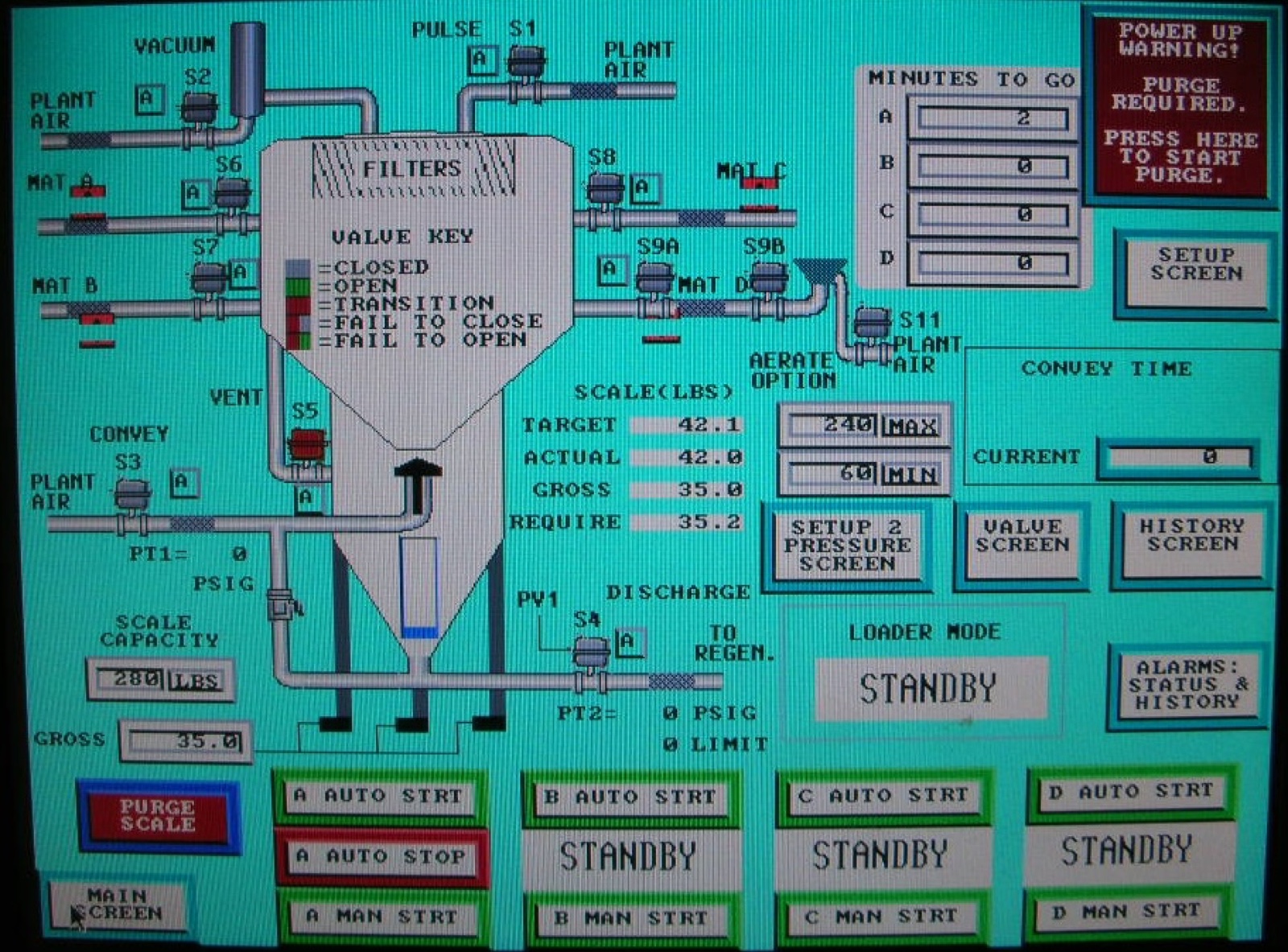
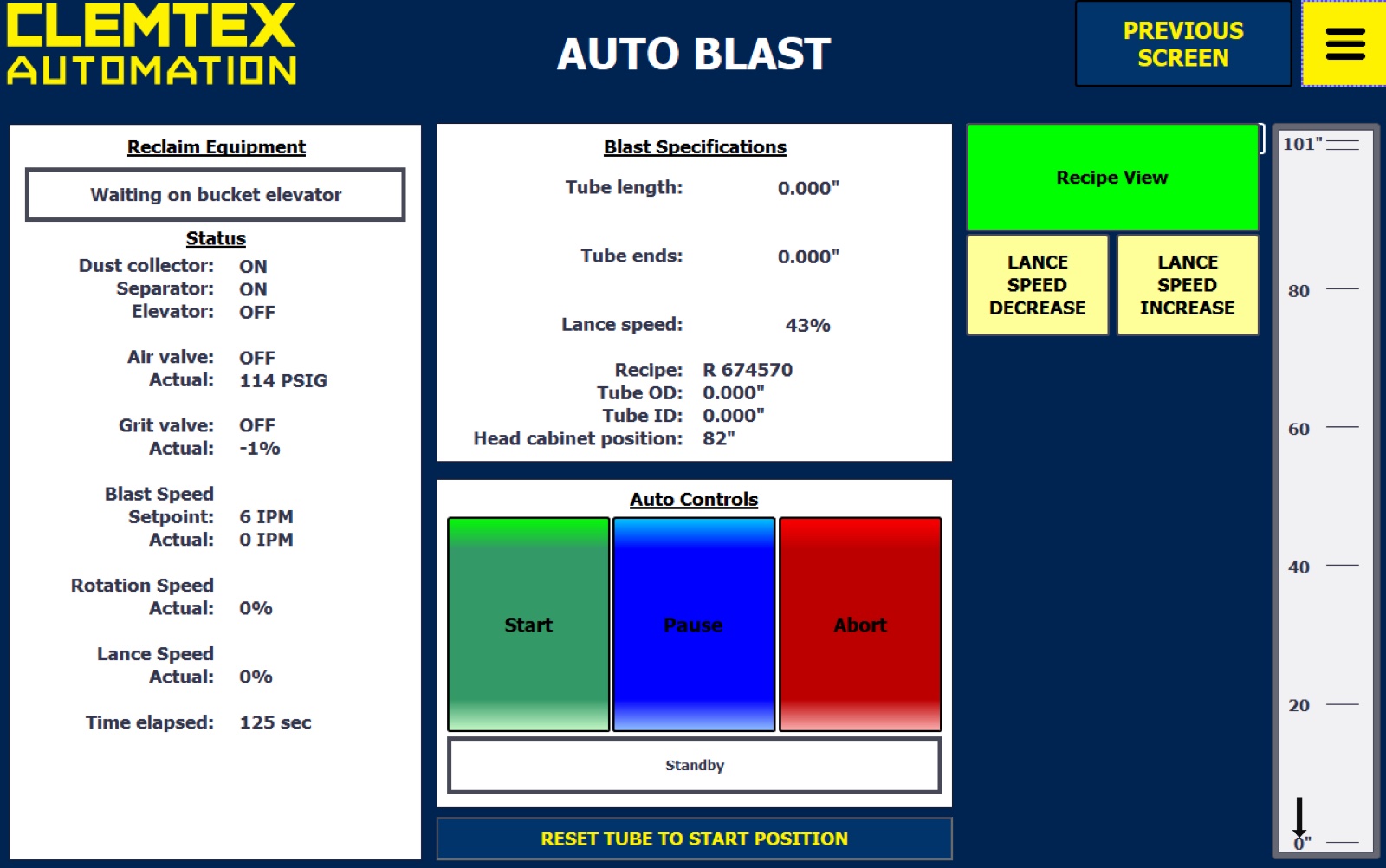
Operator screens, then and now
Both screens below are from delivered systems. The first is a bulk loader control screen from around 2006. The second is a current auto-blast screen. The function is the same kind of thing, an automated cycle with scale readouts, valve status and a purge sequence. What changed is contrast, touch-sized controls, and screens that a plant can maintain and extend.
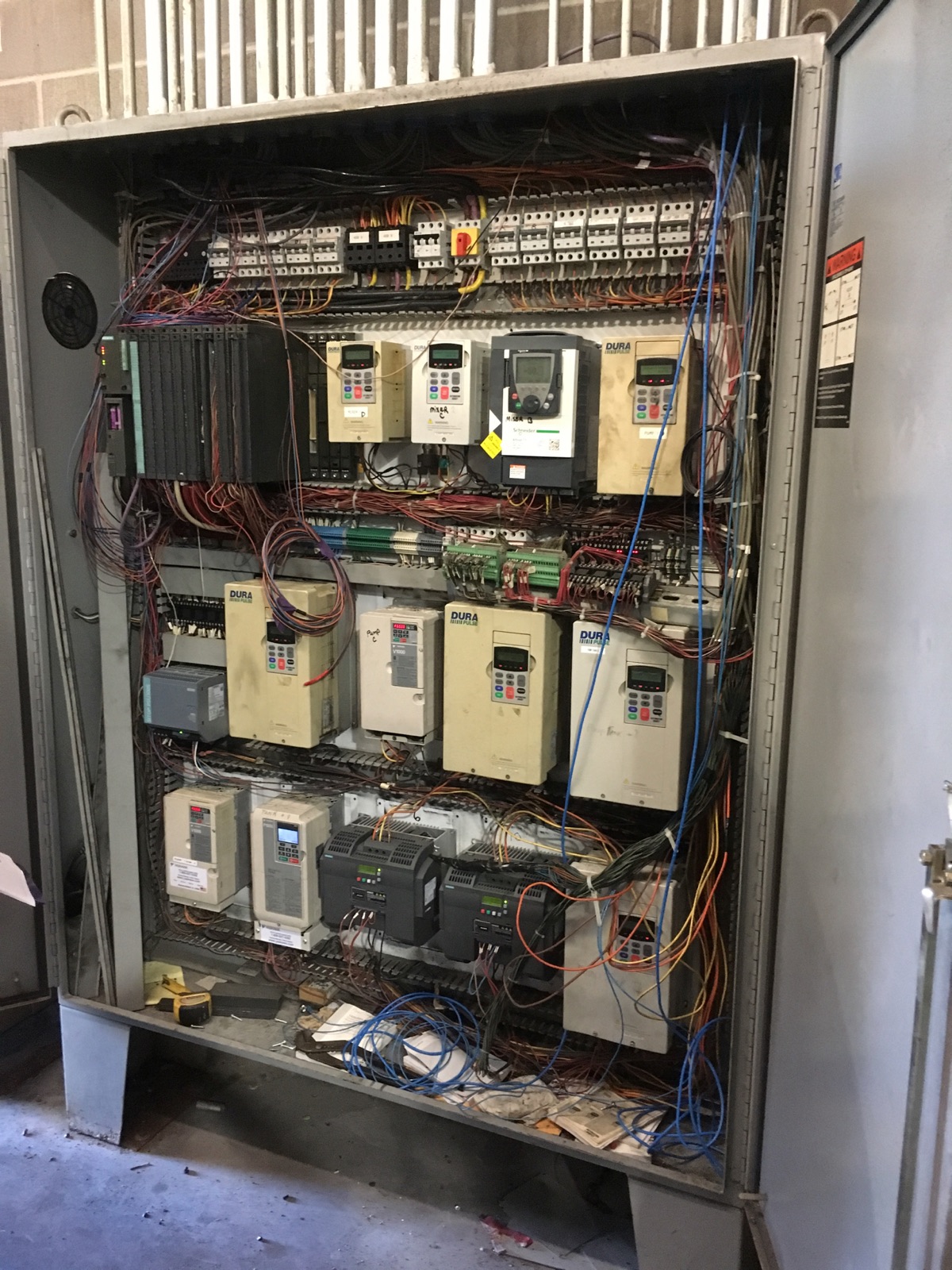
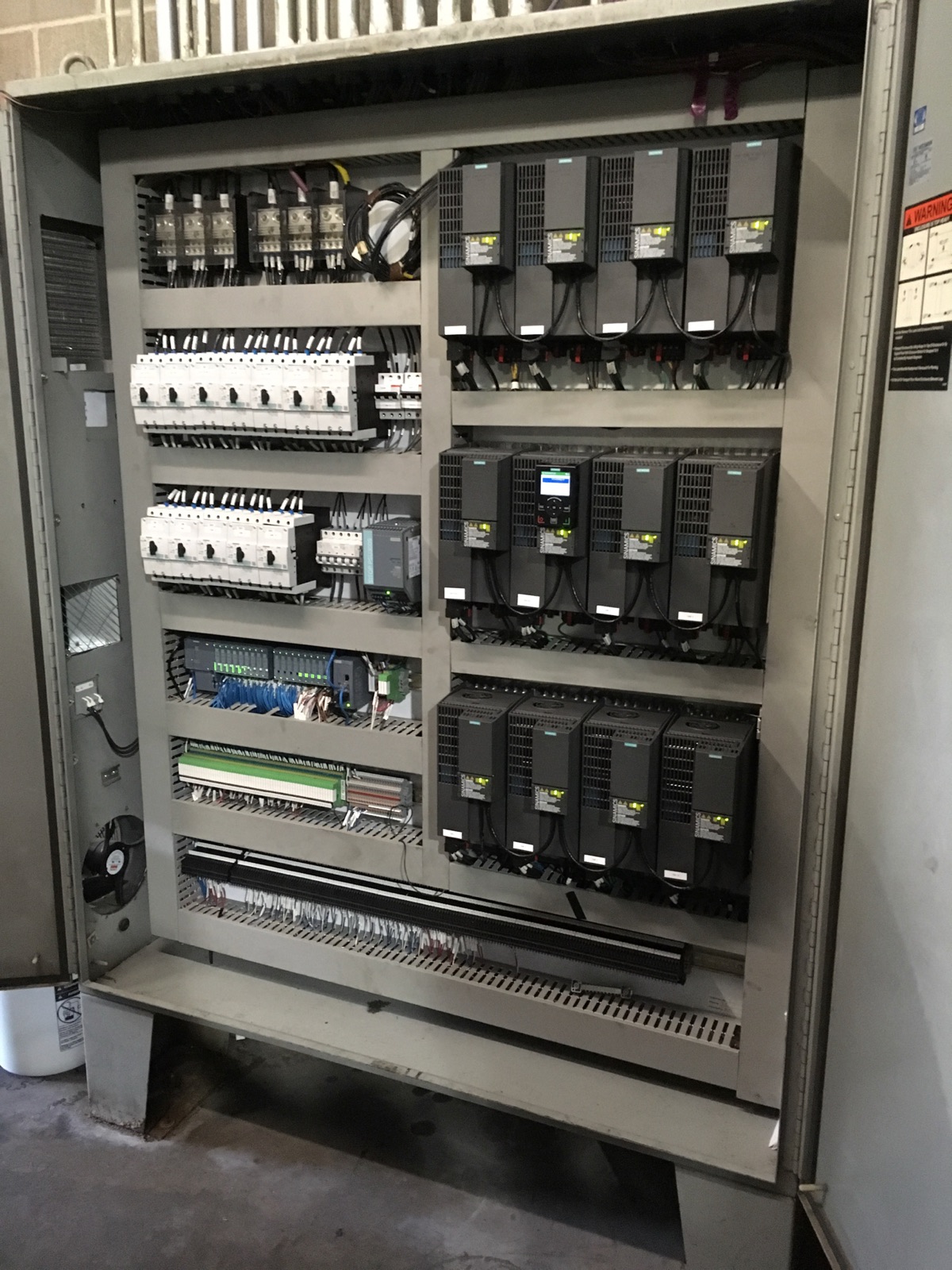
Discontinued PLC to current PLC
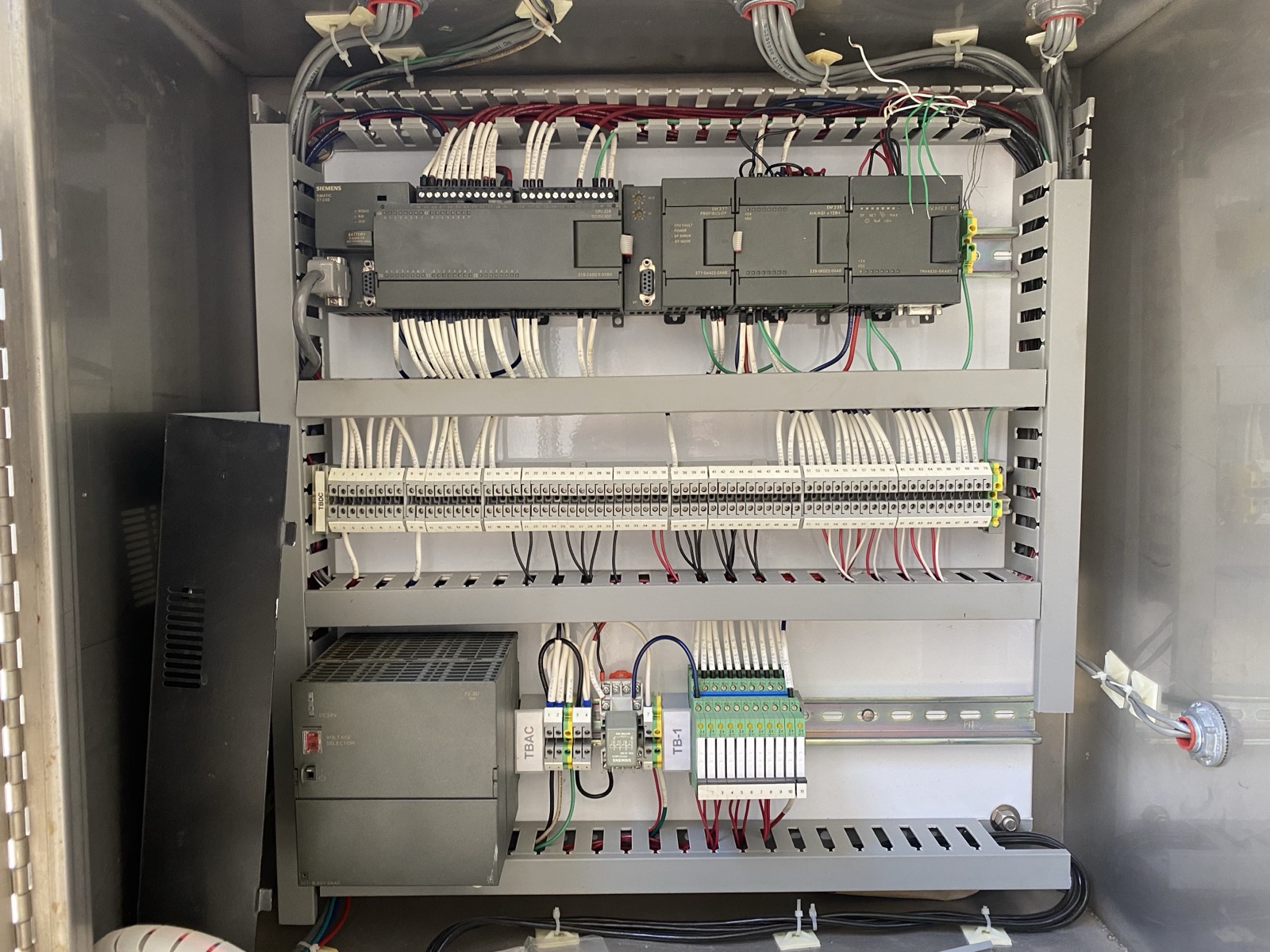
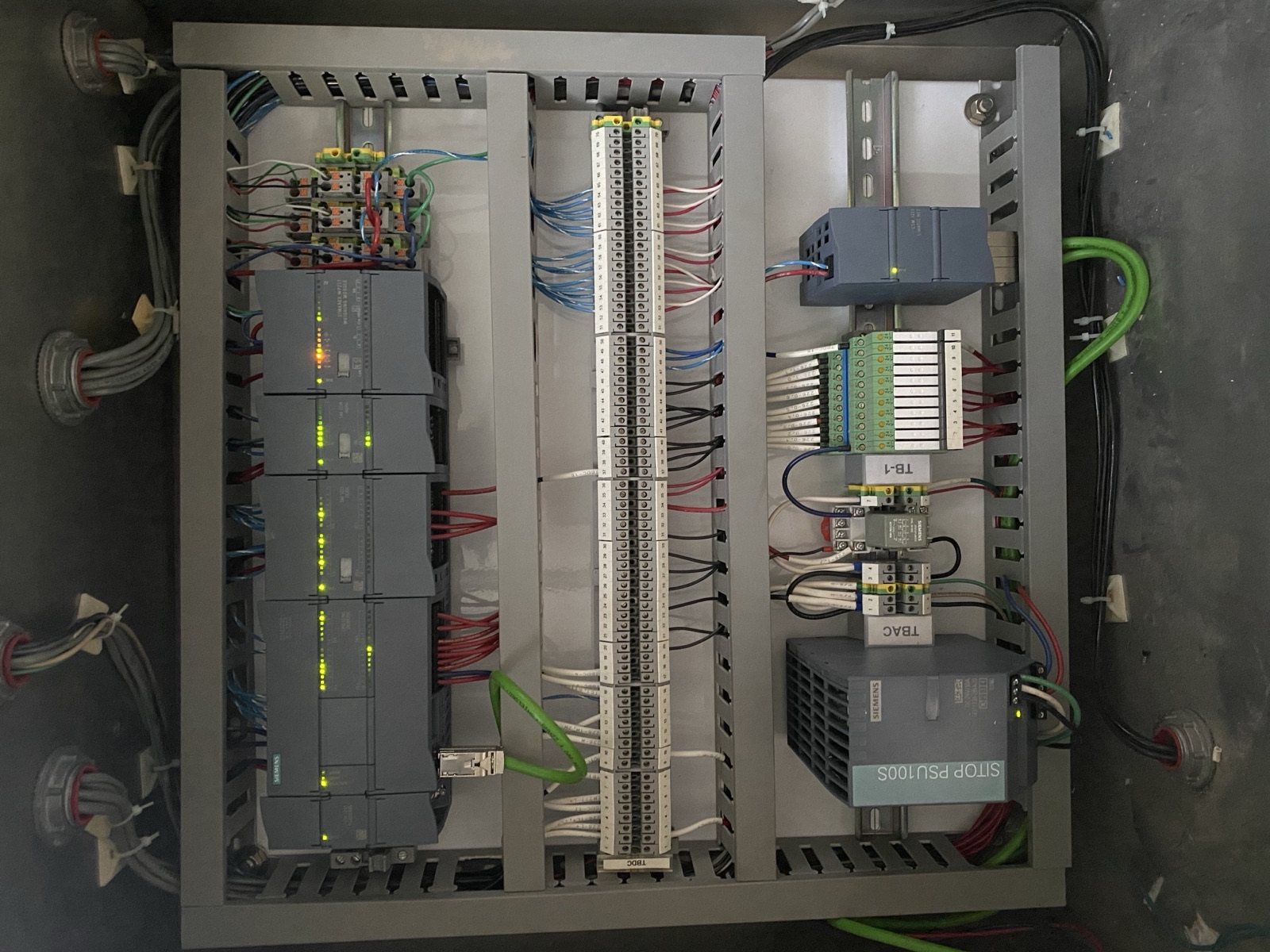
A bulk loader running on a discontinued S7-200, converted to a current S7-1200 with the field I/O re-terminated and labeled and a modern 24 V power supply. Same enclosure, same field wiring, same loader logic.
Real upgrades, in every form they take
- A rotor blast machine's controls modernized to an S7-1200 PLC, a 7-inch touchscreen and G120C drives for cabinet travel and rotation, on Profinet.
- A stator spray rig retrofitted with incremental encoders and high-speed counters to monitor lance and lift position, replacing legacy lift drives with G120C drives and adding runaway-lance protection against slipped brakes and missed limit switches.
- A loader running on a discontinued S7-200 converted to a current S7-1200 with re-terminated, labeled field I/O and modern 24 V power distribution.
- Comfort-panel HMIs migrated to WinCC Unified, with new panel hardware and full screen reprogramming.
- Complete Rockwell-to-Siemens conversions for plants standardizing on one platform: logic, I/O and HMI screens, with the existing system as the specification.
What an upgrade actually involves
We start by documenting what the existing system truly does, including the undocumented behaviors the plant has come to depend on. Migration then proceeds with the logic as the fixed reference. New hardware and screens are proven against existing behavior before changeover, and cutover is planned around production windows with a verified rollback path. Where panels are obsolete, we migrate to current platforms. Where communication is proprietary or aging, we bring connections up to current standards while existing supervisory systems keep working.
When to move
Legacy systems rarely fail politely. They fail as unobtainable spare parts, retiring experts, and an HMI nobody can modify. The right time to upgrade is while the old system still runs, so it can serve as the living specification for its replacement. Our chemical plant upgrade ran exactly this playbook, phased so production never stopped.
Still running on hardware nobody can buy?
Tell us what the old system does. We will keep every behavior you trust and replace everything around it.
Get in Touch (713) 672-8251